if you search "plumber near me" or "[your service] in [your city]" right now and your business isn't in the top three results on the map, you're losing that customer to a competitor permanently, in most cases. Local ranking isn't a mystery Google keeps hidden. It comes down to three factors Google has stated directly, a foundation almost every business gets partially wrong, and a layer of more advanced tactics that separate the businesses dominating their market from the ones just getting by.
This is everything, foundation through advanced tactics, in one place.
The Three Factors Google Actually Ranks On
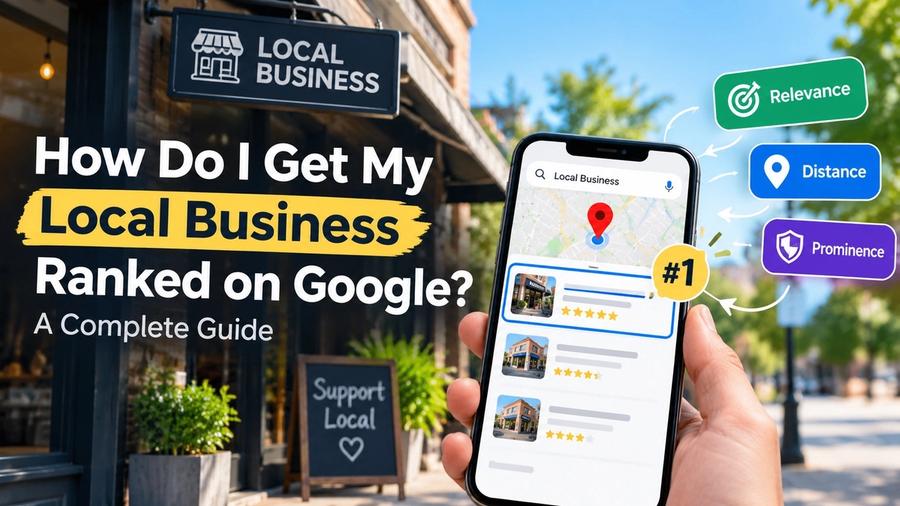
Google has said directly that local ranking comes down to three things:
Relevance — how well your Google Business Profile matches what someone searched for. Category selection, your business description, the specific services listed, and your website content all feed this.
Distance — how close your business is to the person searching, or to the area they searched. This is largely structural (where your address is, or how your service area is configured), but it's not entirely out of your control, which we'll get into.
Prominence — how well-known and trusted Google considers your business, based on reviews, citations, backlinks, and how much activity and engagement your profile generates.
Almost every tactic in local SEO is really just a lever on one of these three. Understanding that makes the rest of this much easier to evaluate including tactics you'll hear elsewhere that don't actually move any of the three.
Getting the Google Business Profile Foundation Right
Before anything advanced, most businesses lose ranking potential on things that should be simple.
Claim and Verify Your Profile Properly
An unclaimed or unverified profile can't compete at all. If you haven't claimed your listing, or verification has stalled, that's the first thing to fix and it's worth doing right the first time, since a shaky verification can create compliance problems that surface later. (If you're stuck here, our google business profile verification service covers every method, including video verification and service-area business cases.)
Get Your Categories 100% Right
Your primary category should match exactly what you do, not the broadest category you could technically claim. A business that installs and repairs AC units and furnaces isn't necessarily best served by a single generic "HVAC Contractor" category year-round. Categories can and should reflect what's actually in demand, which we cover in detail on our HVAC Marketing SEO
NAP Consistency Isn't Optional
Your name, address, and phone number need to be identical not just similar across your website, your Google Business Profile, and every directory you're listed on. Inconsistencies confuse Google about which listing is authoritative and dilute the trust signal citations are supposed to build. This is worth a full audit at least once a year, since directories update, phone systems change, and old listings quietly drift out of sync.
Photos That Actually Show Your Work
Geotagging photos used to be a common recommendation, but it's not something you can rely on anymore. Google strips the embedded location data from most uploaded images, so it isn't a meaningful signal today. What actually matters is the photo content itself. Google's systems use image recognition to understand what's genuinely shown in a photo a completed installation, a branded work van, a technician on a real job site and weigh that against a generic stock image or an empty storefront shot. Consistent, real photos of your actual work still feed the relevance and trust signal; the mechanism has just shifted from metadata to what the image actually shows. Make it a habit for your team to photograph completed jobs it takes thirty seconds and compounds over time.
A Complete, Specific Services List
List your actual individual services rather than one generic line. "Drain Cleaning," "Water Heater Installation," and "Leak Detection" listed separately give Google far more to match against a specific search than "Plumbing Services" alone.
Local Pack Optimization Specifically
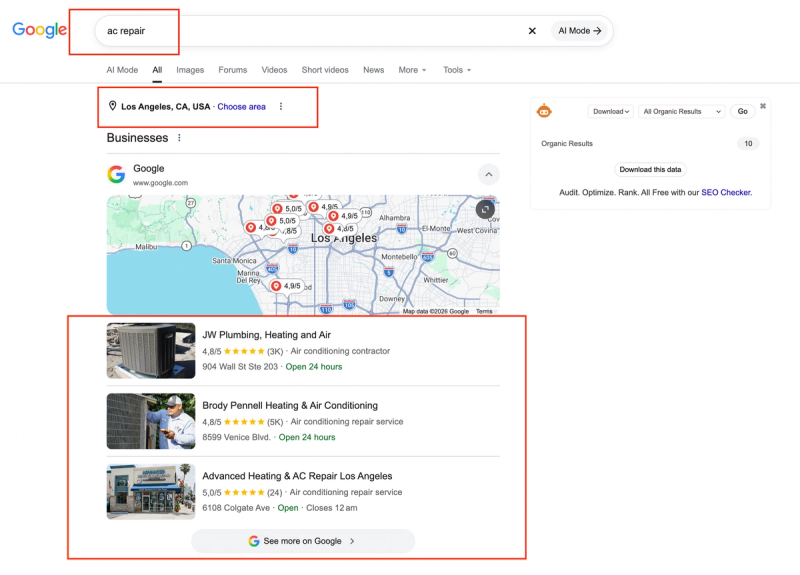
The Local Pack — the map and three-business list that appears for location-based searches is where most of the visible competition actually happens. A few things move the needle here specifically:
Location pages for every area you serve. If you serve fifteen cities, you need fifteen genuinely unique pages — each built around what people in that specific area are actually searching for, not a template with the city name swapped out. A copy-pasted location page does close to nothing for you and can actively look like thin content to Google.
Local citations and backlinks. Citations from directories relevant to your industry, and backlinks from genuinely local sources a chamber of commerce, a local news mention, an industry association carry real weight because they reinforce that you're an established, real business in that specific area.
A review generation system, which matters enough to cover on its own below.
Reviews: Why Velocity Matters More Than Total Count
Here's something most businesses get backwards: a company with 150 reviews adding 30 new ones a month will consistently outrank a company sitting on 400 reviews that added 2 last month. Google weighs momentum, not just the total you've accumulated. A large historical review count with no recent activity reads as a business that used to be busy not one that's thriving right now.
The fix is building review requests into your actual workflow timed to right after a job is completed and paid, when satisfaction is highest rather than an occasional reminder campaign. Consistency matters more than any single push. A steady stream over time beats a sudden spike followed by months of silence.
Diversifying where those reviews live also matters. Google reviews carry the most direct weight for Google's own ranking, but a presence across Yelp, industry-specific platforms, and social media reinforces the same trust signal from multiple directions.
Advanced Tactics: What Actually Moves Rankings Faster
This is where experienced local SEOs diverge from generic advice and where a few tactics genuinely work faster, but carry tradeoffs worth understanding before you use them.
Exact-Match Business Naming (Use With Real Caution)
A business name that includes your core service and city "Dallas Plumbing Co." rather than a brand name with no descriptive information does carry a real ranking advantage in Google Maps, since it reinforces relevance directly in the name field.
Some businesses take this further by filing a DBA for a specific service line and creating a separate profile around it. This can work. It can also be one of the fastest ways to get a profile suspended if the name doesn't genuinely match how the business operates and is licensed a keyword-stuffed or inconsistent name is one of the single most common suspension triggers we see. If you go this route, the name has to be a real, legitimate DBA that matches your actual licensing and legal setup, not a keyword string dressed up as a business name. We say this directly because reinstating profiles suspended for exactly this reason is a meaningful part of what we do.
Multiple Google Business Profiles (High Risk, High Reward)
In competitive metros, a single profile sometimes isn't enough real estate. Legitimately separate service lines or additional real locations can support additional profiles, giving you more presence in the Map Pack.
The caveat here is not small: this has to reflect genuinely separate, legitimate business operations a real additional location or a truly distinct service line, not the same business duplicated to game visibility. Done incorrectly, this is a fast path to suspension across multiple profiles at once, not just one.
Set Hours to Match Real Availability — Including 24/7 If It's Genuine
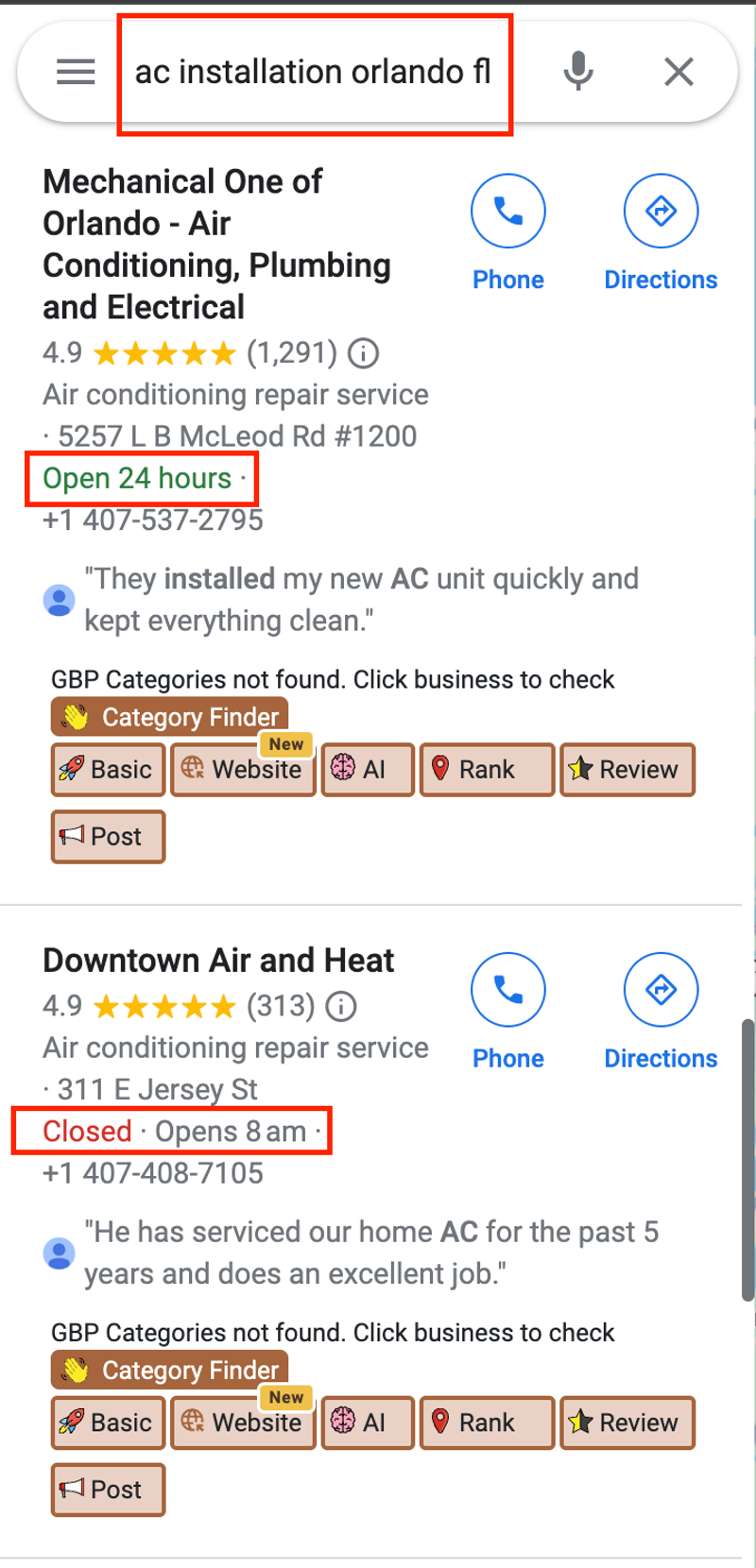
If you genuinely offer round-the-clock emergency dispatch, list your hours as 24/7 this lets you show up in searches happening at 7pm when purely 9-to-5 competitors are filtered out as closed. A large share of home service searches happen in the evening, after people get home from work and notice the problem.
The important word there is "genuinely." Listing 24/7 hours for a business that isn't actually reachable overnight is inaccurate information, and inaccurate hours are exactly the kind of thing that erodes trust with customers and creates compliance problems with your profile. If you want the 24/7 advantage without staffing a phone around the clock, an answering service or a well-configured AI agent that can genuinely take the call is the honest way to get there.
Branded Search Volume
The more people search your business by name, the more Google appears to trust the brand which some practitioners believe carries over into how you rank for the unbranded searches ("plumber near me") that actually bring in new customers. Anything that drives people to look your company up by name social media presence, vehicle branding, yard signs feeds this indirectly. This is a widely held belief in the practitioner community rather than something Google has confirmed as a direct ranking input, but the behavior it encourages (being visible and recognizable in your market) is worth doing regardless of the mechanism.
Speed to Lead
How fast you respond to an incoming lead from your website, Google's Local Services Ads. Most competitors are slower than they think; a lead that sits for hours is a lead that's often already booked someone else. Setting up fast, personalized response whether that's a well-trained team process or an AI agent that responds within minutes with a real, specific message rather than a generic template protects the value of leads you're already paying for.
This isn't a direct Google ranking factor in the way relevance or prominence are, but it determines whether your SEO and ad spend actually turns into booked business, which is the entire point of ranking well in the first place.
Service Area vs. Storefront
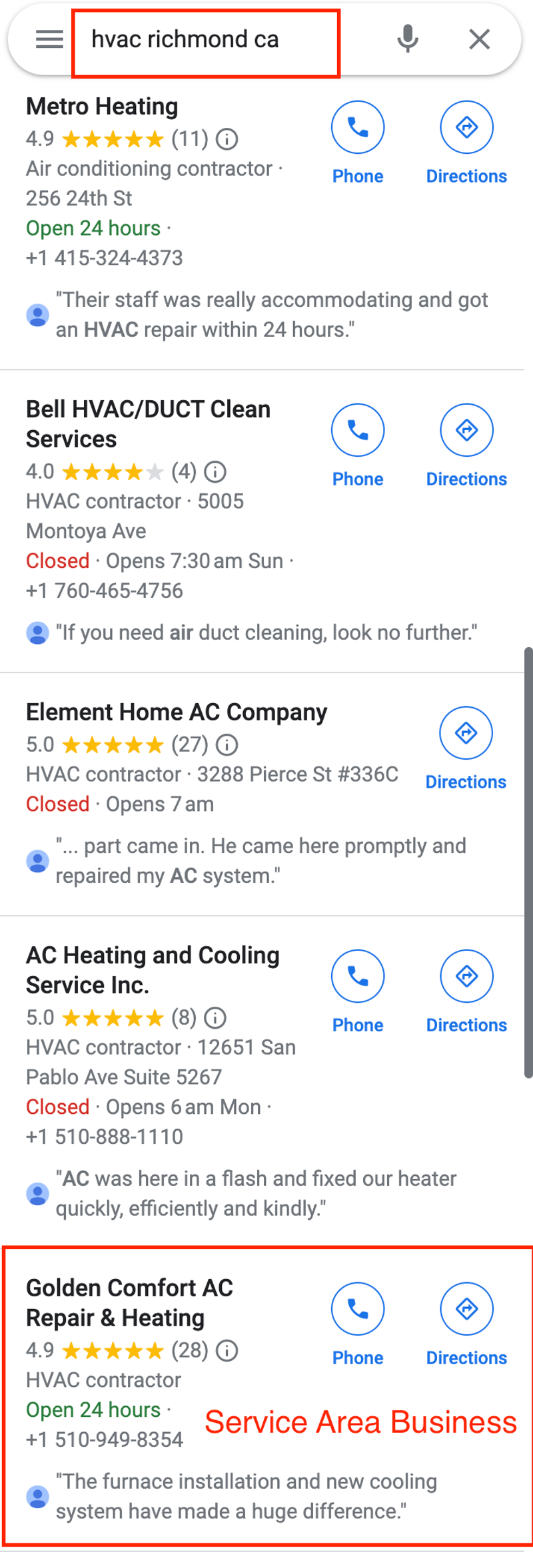
A real, physical address is a genuine structural advantage in most competitive markets it directly strengthens the distance signal in a way a service-area setup can't fully replicate. That said, plenty of legitimate service-area businesses rank well without a public storefront; it requires a different, more deliberate strategy around service area configuration, location-specific content, and citation building rather than assuming a physical address alone will carry the ranking. If you're a service-area business, don't take "you need a storefront" as a reason to give up on ranking it just means the path there looks different.
Schema Markup
LocalBusiness, Service, and FAQ schema markup structured data embedded in your website's code help both Google and AI models understand exactly what your business does, where you operate, and what you offer. It doesn't replace good content, but it makes that content far easier for search engines and AI systems to parse and cite correctly.
FAQ Content Written the Way Homeowners Actually Ask
Write out the exact questions your customers would type into Google or ask ChatGPT, and answer them clearly and directly on your service pages. This does two things at once: it helps you rank in traditional search, and it gives AI-generated search summaries a clean, direct answer to pull from and cite. Write these the way a real homeowner would phrase the question not the way an SEO would write it for keyword density. The difference is more noticeable than it sounds, both to readers and, increasingly, to the AI systems summarizing search results.
Putting This Together
None of this requires doing everything at once. If your Google Business Profile isn't fully claimed, verified, and complete, start there nothing else matters until that foundation is solid. From there, review velocity and NAP consistency are the highest-leverage, lowest-risk improvements available to almost any business. The more aggressive tactics — naming strategy, multiple profiles are real levers, but they're worth approaching with the suspension risk clearly in mind, since undoing that damage takes considerably longer than the ranking gain took to build.
If you want a specific read on where your own profile stands against these factors, our Local SEO & Google Business Profile Ranking Service starts with a free audit before you commit to anything. And if a previous attempt at one of the more aggressive tactics already got a profile suspended, our GBP Reinstatement Service is built specifically around diagnosing exactly what went wrong before appealing.