





Showing up on Google Maps is not the same as ranking well on Google Maps. A huge number of local businesses have a fully verified, active Google Business Profile that simply does not appear in the local pack when a nearby customer searches for what they offer. The profile exists. It just loses to competitors every time it matters.
This is different from a suspension. Nothing is broken and nothing is hidden, the profile is doing exactly what it is set up to do, which is rank based on relevance, distance, and prominence signals that most business owners never touch after the initial setup. Categories left at defaults. Descriptions that were never optimized. Reviews that trickle in without any system behind them. Citations scattered inconsistently across directories. Each one is a small leak, and together they are usually the entire gap between page one and page three.
We audit every signal Google actually uses to rank local businesses, fix what is broken or missing, and then manage the ongoing work, reviews, posts, citations, content, that keeps your ranking moving in the right direction instead of sliding back down.
We've spent seven years doing local SEO inside digital marketing agencies in the USA, working on more than 1,000 Google Business Profiles. That experience taught us something most agencies won't say out loud: not every profile can rank everywhere, and the honest answer at the start saves everyone time and money.
What's Usually Holding a Profile Back
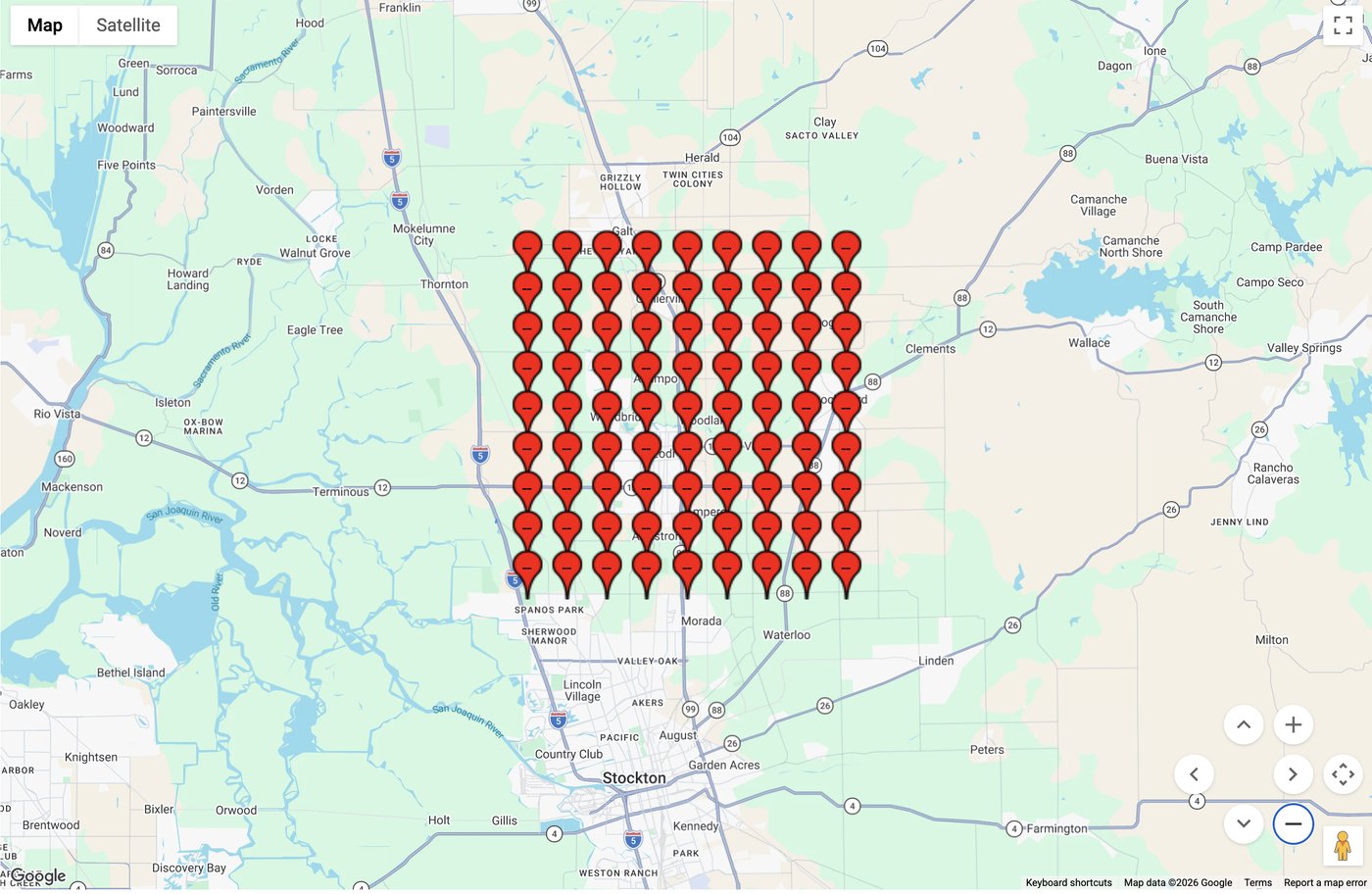
In almost every audit we run, we find the same categories of issues: a primary category that doesn't match what the business actually does or is too broad to compete in, a business description that reads like boilerplate instead of matching the language customers actually search, inconsistent NAP (name, address, phone) between the profile, the website, and directory listings, a thin or inconsistent review profile with no system for generating new reviews, and missing service area configuration for businesses that serve a radius rather than a single storefront.
None of these show up as an error or a warning anywhere in the Google Business Profile dashboard. They just quietly cap how well the algorithm is willing to rank you, which is why so many otherwise legitimate, well-run businesses stay stuck in positions 4 through 10 indefinitely.
Why Some Businesses Can't Rank Where They Want (and What to Do Instead)
Google ranks local businesses on three things: relevance, distance, and prominence. You can improve relevance and prominence a lot. Distance you can't change.
We often hear from owners who want to rank 5 miles or more from their location, in a town where they don't have an office. Without a real location in that area, ranking there on Google Maps is very hard, no matter how much optimization you do. When that's the situation, we tell you honestly, and our usual recommendation is to open a real location in that area, with its own properly verified Google Business Profile. Many of our clients do exactly that once their first location is performing.
Before we take on any ranking project, we check whether your goals are realistic for your profile and your website. If they aren't, we'll say so.
How We Work: The First 90 Days
Every engagement starts with a full ranking audit, your current position for your priority search terms, a competitive gap analysis against the businesses currently outranking you, and a profile and website review against Google's guidelines. It sets the plan for everything we do after.
Days 1 to 30: Google Business Profile first
Your Google Business Profile is the most important part of local SEO, so that's where we start.
- A full audit of your profile: name, categories, services, description, hours, photos, and service areas
- Optimization of everything that's missing or weak
- Fixing inaccurate NAP (name, address, and phone number) anywhere it appears online
- Citations: building them if you have none, correcting the ones that are wrong, and adding niche directories specific to your industry
- Then we move to your website
Days 31 to 60: Reviews
Reviews are one of the strongest ranking factors, and they're the one thing neither of us fully controls, because they come from your customers. So we build a system that makes them easy to get:
- An automated SMS or email sent to your customer right after the job is done, depending on your budget
- A simple, honest message asking them to share how they really felt about your service
No incentives, no filtering out unhappy customers, no fake reviews. That keeps you fully within Google's review policies.
Days 61 to 90: Growth and new opportunities
- Keep the review campaign running
- Website optimization based on real data from Google Search Console and Google Analytics 4: what people search, which pages they land on, and how they behave on your site
- Quick wins we spot in that data
- New service area pages where we see real opportunity
- Planning expansion into a new city or neighbourhood
By day 90, many of our clients are ready to scale and open a new location in another city or neighbourhood. When they do, we start that new profile from scratch, while continuing the ongoing work on the first.
When will you see results?
Most clients see improvement within 30 days, especially when they start their review campaign straight away while we work on the profile. For businesses that are slower to get reviews moving, it can take up to 90 days.
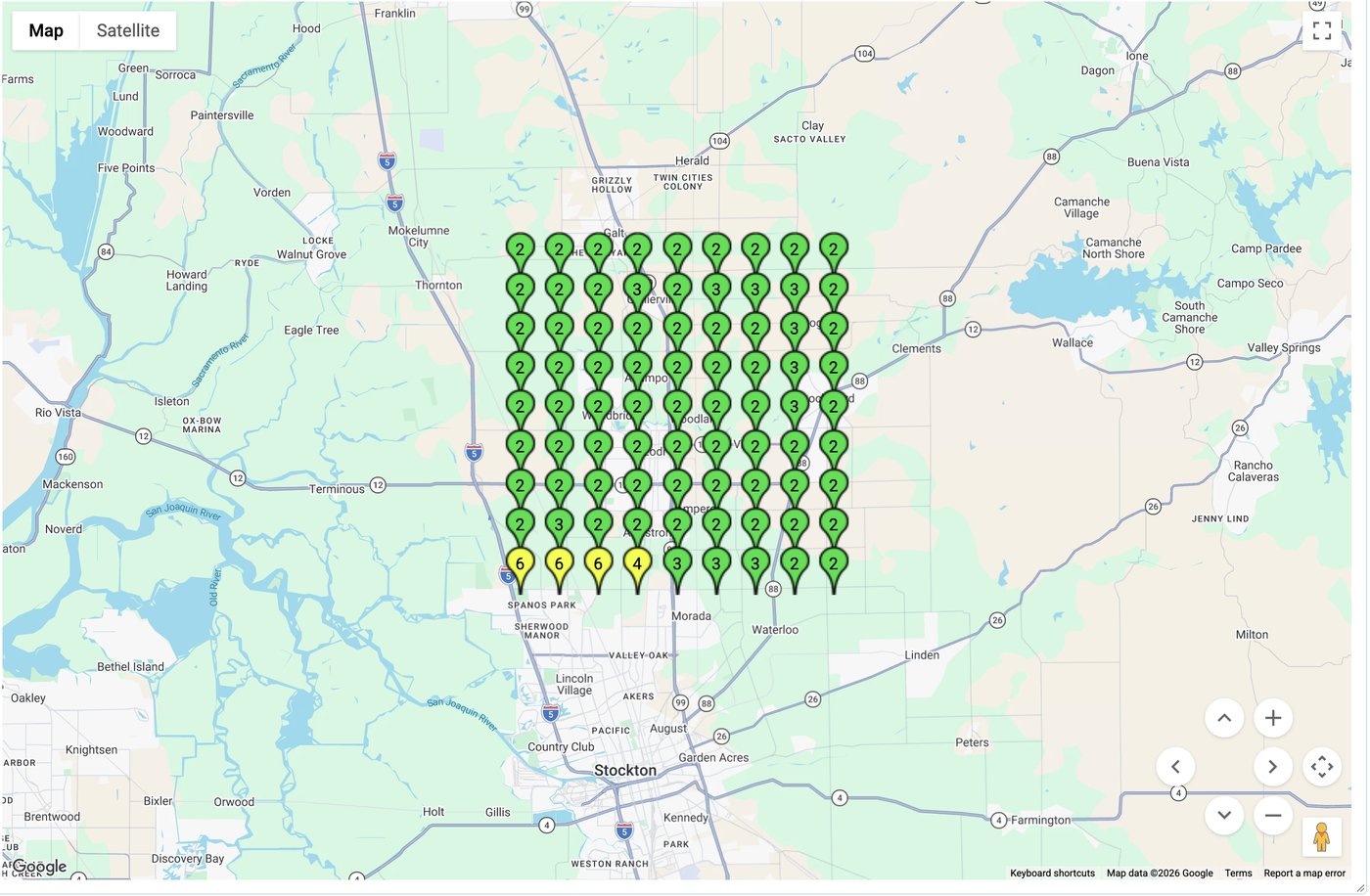
If at any point the audit surfaces a compliance issue that puts the profile at risk of suspension, we flag and fix it as part of the engagement, a suspended profile during an active ranking campaign loses everything that's been built. If your profile is already suspended, start with our reinstatement service first.
Categories That Follow Your Business, Not a Template
Your primary category has a huge influence on which searches you appear in. During onboarding we ask what you really want to focus on, then we set your primary category and the page your profile links to around that focus.
For seasonal businesses, we go further. For an HVAC company, we switch the focus with the weather: air conditioning repair in summer, with the profile linking to the AC repair page, then furnace repair in winter, linking to the furnace page. But we never assume. A client in Florida rarely needs furnace repair, and many homes in California heat with heat pumps or boilers. We check the real local data before choosing. See our HVAC strategy →
Citations: Easy Wins First
We start with the common, free directories for your country, the ones that are quick to claim and correct. Then we move to niche directories for your industry and local directories for your area. If a valuable directory is paid, we ask you first, and you decide whether to add it.
The Tools We Use
We use professional tools, and we cross check them, because a single tool can be wrong.
- Geo grid ranking: Local Viking, Places Scout, and Local Brand Manager. We compare three tools to make sure your ranking data is accurate.
- On page and technical SEO: Ahrefs, Semrush, and Screaming Frog
- Citations: BrightLocal
- Indexing and performance: Google Search Console and Google Analytics 4
We also check Google by hand. We search your main services and read the People Also Ask questions, then answer those questions in your FAQs, your service pages, or new content.
Local SEO Myths We Hear All the Time
- "More reviews guarantee a #1 ranking." Reviews matter a lot, but they're one factor among many. Relevance and distance still count.
- "Service businesses should hide their address, even if they have an office." If you have a real office that welcomes customers, showing it can help you rank around it.
- "A huge service area makes you rank everywhere." The service area tells customers where you work. It doesn't make you rank far from your location.
- "Keywords in the business description boost rankings." The description helps customers understand you, but it isn't a direct ranking factor.
- "Geotagging photos helps you rank." Adding location data to image files doesn't improve your rankings.
Showing Up in AI Overviews and AI Search
More and more customers never scroll to the map. They read the Google AI Overview at the top of the results, ask Google AI Mode a follow up question, or type the whole problem into ChatGPT, Gemini, or Perplexity and ask who they should call. Those tools still recommend local businesses by name, and they decide who to mention using information that already exists about you online.
That information mostly comes from the same places we already work on. Your Google Business Profile gives AI your rating, review count, hours, and services. Your reviews give it the words it uses to describe you, things like fast, honest, or good with emergencies. Your website gives it answers to the questions customers actually ask. And third party sources like directories, local news, associations, and best of lists tell it whether other people vouch for you too.
So AI search optimization is built into how we manage your local SEO, not sold as a separate gimmick. We keep your business details identical everywhere, including Bing Places and Apple Business Connect since those feed other assistants. We add plain language FAQ content and clear service pages your customers would want answered, along with LocalBusiness schema markup so machines can read your details without guessing. We build a steady flow of detailed reviews, and we go after mentions on the sites AI tools tend to cite in your market.
We also test it. We run the real questions your customers ask through AI Overviews, AI Mode, ChatGPT, and Gemini, note whether you come up and which sources get cited, and then work on those sources. To be straight with you, nobody can guarantee a spot in an AI answer. Results change from person to person and conversation to conversation. What we can do is make sure that when AI goes looking for the best answer in your area, everything it finds about you is accurate, consistent, and convincing.
Pricing
Every engagement starts with a full ranking audit so you know exactly where you stand. Pricing is scoped to your business, because some markets are much harder to rank in than others. A plumber in a small town and a dental clinic in a big city need very different amounts of work. We agree the price with you before anything starts, with a three month initial period, then month to month.